How Many Overs Does a Cricket Ball Last: Hello friends, in cricket, people often ask, ‘How long does a ball last?’ This question seems simple, but the answer isn’t that easy. According to our experience making cricket balls in Meerut, just looking at the number of overs isn’t enough.
The quality of the leather, inner texture, stitching, size, outer layer, pitch, and care—all these factors affect how quickly a ball wears out. goverment yojna
A good ball can last a long time on a soft grassy outfield, but the same ball can wear out quickly on a dry and rough surface. That’s why you can’t set a fixed lifespan for a ball for every field and every condition.
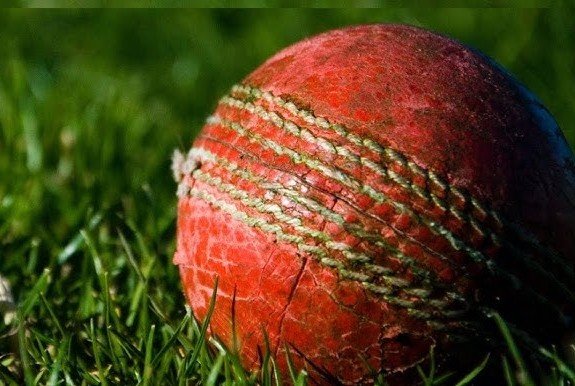
Inside the Ball
The inside of the ball affects its hardness, weight, balance, bounce, and size.
A regular leather cricket ball has a core made of cork, tightly wrapped with yarn or wool around it. This structure can vary between different balls and brands. Some cheaper practice balls may use other materials.
When comparing balls, look for:
- – Proper balance of weight
- – Uniform shape from all sides
- – Desired hardness
- – Controlled bounce
- – Texture suitable for the level of play
How do leather and the outer layer affect the durability of the ball?
The durability of leather doesn’t just depend on how it’s processed. The quality and thickness of the hide, the way it’s treated, the color, polish, and the outer layer—all these things affect the ball.
When comparing balls, check:
- – Type and thickness of the leather
- – Finish of the outer surface
- – Ability to withstand cuts and scratches
- – How well the leather keeps its shape
- – Whether the ball is made for practice or a match
Many cricket balls use alum-tanned leather, but just seeing “alum-tanned” doesn’t guarantee good quality. You need to look at the entire texture and finish of the ball.
Hand-stitched and machine-stitched cricket balls
The stitching method can affect the seam, but not every hand-stitched ball is good, and not every machine-stitched ball is bad.
The quality of the leather, thread, tension of the stitch, seam height, ball size, and finish—all of these things matter.
A well hand-stitched ball can have these qualities:
- Strong and raised seams
- Good grip for bowlers
- Better support for the ball’s texture
- Craftsman’s control over stitch tension
With the help of machines:
- The ball can be given a uniform shape
- The texture can be kept consistent
- Work can be done quickly
- Dimensions can be controlled
The right ball should be chosen based on its overall construction and how it will be used.
How does the type of ball affect its use?
| Ball type | Common Use |
|---|---|
| Four-piece red ball | For long-term use in long-format matches |
| white ball | For limited overs cricket; brightness may be reduced during play |
| pink ball | For long day-night matches |
| Two-piece leather ball | For school, coaching and regular practice |
How does the format of a match affect the use of the ball?
Red, white, and pink balls are made for different types of matches. The rules of the match and the texture of the ball determine how many overs a ball will be used for.
Red Ball
The red ball is made for long-format cricket. In multi-day matches, after 80 overs, the captain of the fielding team can ask for a new ball.
This doesn’t mean the old ball becomes unplayable after 80 overs. Sometimes the team can continue playing with the old ball.
White Ball
The white ball is used in limited-overs cricket. In current international ODI matches, usually two new balls are used—one from each end.
Because of this, both balls are used in different overs of the innings. The rules can vary in different tournaments.
Pink Ball
The pink ball is made for day-night long matches. Its lifespan depends on the company that makes it, the shiny coating, the ground, lighting, weather, and match usage.
You May Also Like💛🥰😘
Top 10 players who have played the most international matches